HOA Approval for Balcony Turf in Miami: What You Need to Know
If you live in a Miami condo, you already know that your balcony isn't entirely yours to do with as you please. The condo association — your HOA — has rules about what can and can't be placed, installed, or modified on balcony surfaces. These rules exist for good reasons: building aesthetics, structural integrity, drainage, liability, and neighborly harmony. But navigating them can feel daunting, especially if you're not sure whether balcony turf will be approved.
The good news: in our experience installing balcony turf across Miami-Dade and Broward counties, the vast majority of HOA requests for removable balcony turf are approved. The key is understanding what your property manager and board need to see, providing it upfront, and framing the request correctly. In this guide, we'll walk through everything you need to know about HOA approval for balcony turf in Miami — from Florida condo law to the specific documents property managers want.
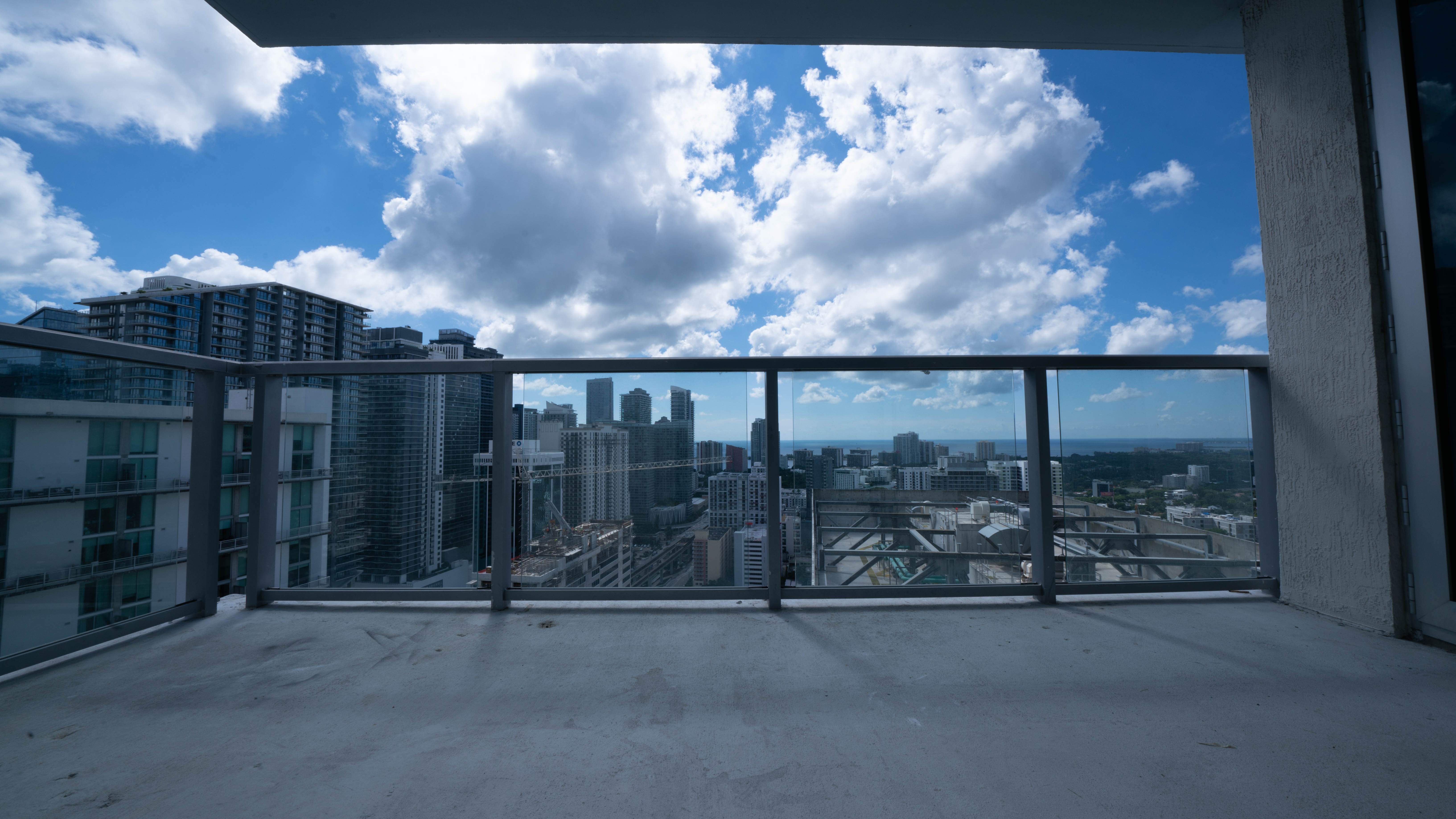
Before: a typical condo balcony awaiting approval and installation.
Florida Condo Law: What It Says About Balcony Modifications
Balcony surfaces in Florida condos are typically classified as limited common elements — areas that are part of the common property but reserved for the exclusive use of a specific unit owner. Under Florida Statute 718.113, material alterations or substantial additions to common elements generally require approval — either as specified in the condo declaration or, if the declaration is silent, by a 75% vote of the unit owners.
However, here's the critical distinction: a removable surface covering is not a material alteration. The statute and subsequent case law define "material alteration or substantial addition" as changes that palpably or perceptively vary or change the form, shape, elements, or specifications from its original design or existing condition in a way that appreciably affects its function, use, or appearance.
A piece of turf sitting on top of the existing surface — without adhesives, without fasteners, without any change to the underlying structure — is a surface covering, not an alteration. It's the same legal category as an outdoor rug, a potted plant, or balcony furniture. Most condo declarations explicitly allow residents to place personal items and furnishings on their balconies.
That said, every condo declaration is different, and your HOA board has the authority to interpret its own rules. So even though the law is on your side, it's always best to go through the formal approval process — which we make as painless as possible.
Removable vs. Permanent: The Key Distinction
The single most important factor in whether your HOA approves your turf request is whether the installation is removable or permanent. Here's the difference:
| Factor | Removable Turf (Ours) | Permanent Turf |
|---|---|---|
| Adhesives | None (or removable strips) | Permanent glue |
| Fasteners | None | Screws/nails into surface |
| Surface damage | Zero | Yes — holes, residue |
| Removal | Lifts in under 1 hour | Requires scraping, repair |
| HOA classification | Furnishing / surface covering | Material alteration |
This is why our installation method matters so much. Because we use no permanent adhesives and no penetrating fasteners, our turf falls squarely in the "furnishing" category — not the "alteration" category. When your property manager or board asks whether this is a permanent modification, the answer is clear: no, it's removable and non-damaging.
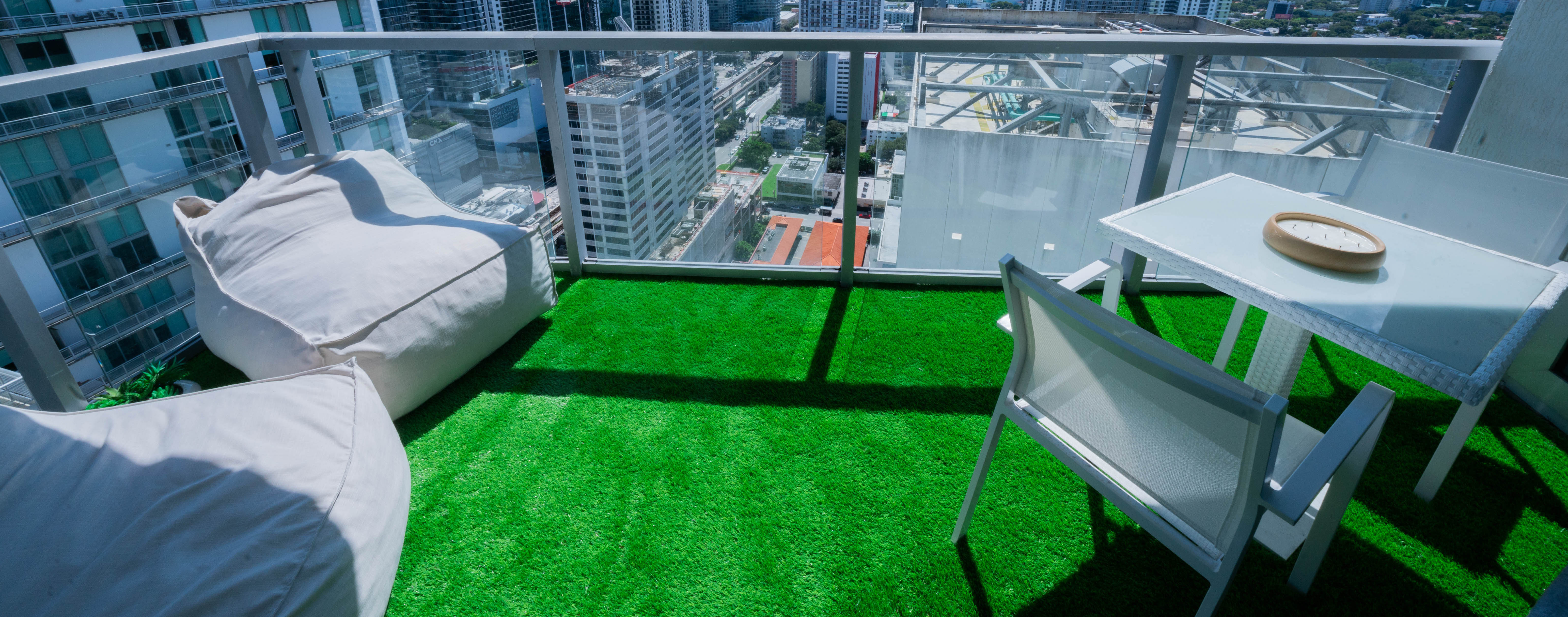
After: removable turf, clean edges, zero permanent changes to the surface.
The HOA Approval Kit: What Property Managers Need
To make the approval process smooth, we've developed an HOA Approval Kit — a complete packet of documents that gives property managers and condo boards everything they need to say yes. Here's what's included and why each piece matters:
1. Certificate of Insurance (COI)
Nearly every Miami condo building requires contractors to carry insurance and name the association as additional insured. Our COI demonstrates that our installer is properly insured, protecting the building from liability. We can provide this directly to your property manager.
2. Product Specifications
A one-page spec sheet covering the turf material, fiber type, backing system, thickness, weight, UV rating, and drainage rate. Property managers want to know exactly what's being placed on the building's surfaces.
3. Installation Method Description
A written explanation of how the turf is installed — emphasizing that it's a non-permanent, removable surface covering with no penetrating fasteners and no permanent adhesives. This is the document that addresses the "is this a modification?" question directly.
4. Drainage Explanation
This is one of the most common concerns from property managers. They want to know: will this cause water to pool on the balcony? Will it interfere with the building's drainage system? Our drainage explanation details the perforated backing system, the drainage rate (typically 30+ inches per hour), and how water flows through the turf and off the balcony exactly as it would without turf — no pooling, no damming, no interference with existing drainage slopes.
5. Photos of Previous Installations
Before/after photos of completed balcony installations in similar buildings. Property managers are visual — seeing what the finished product looks like helps them approve with confidence. We have dozens of installations across Brickell, Downtown Miami, Miami Beach, and Fort Lauderdale to share.
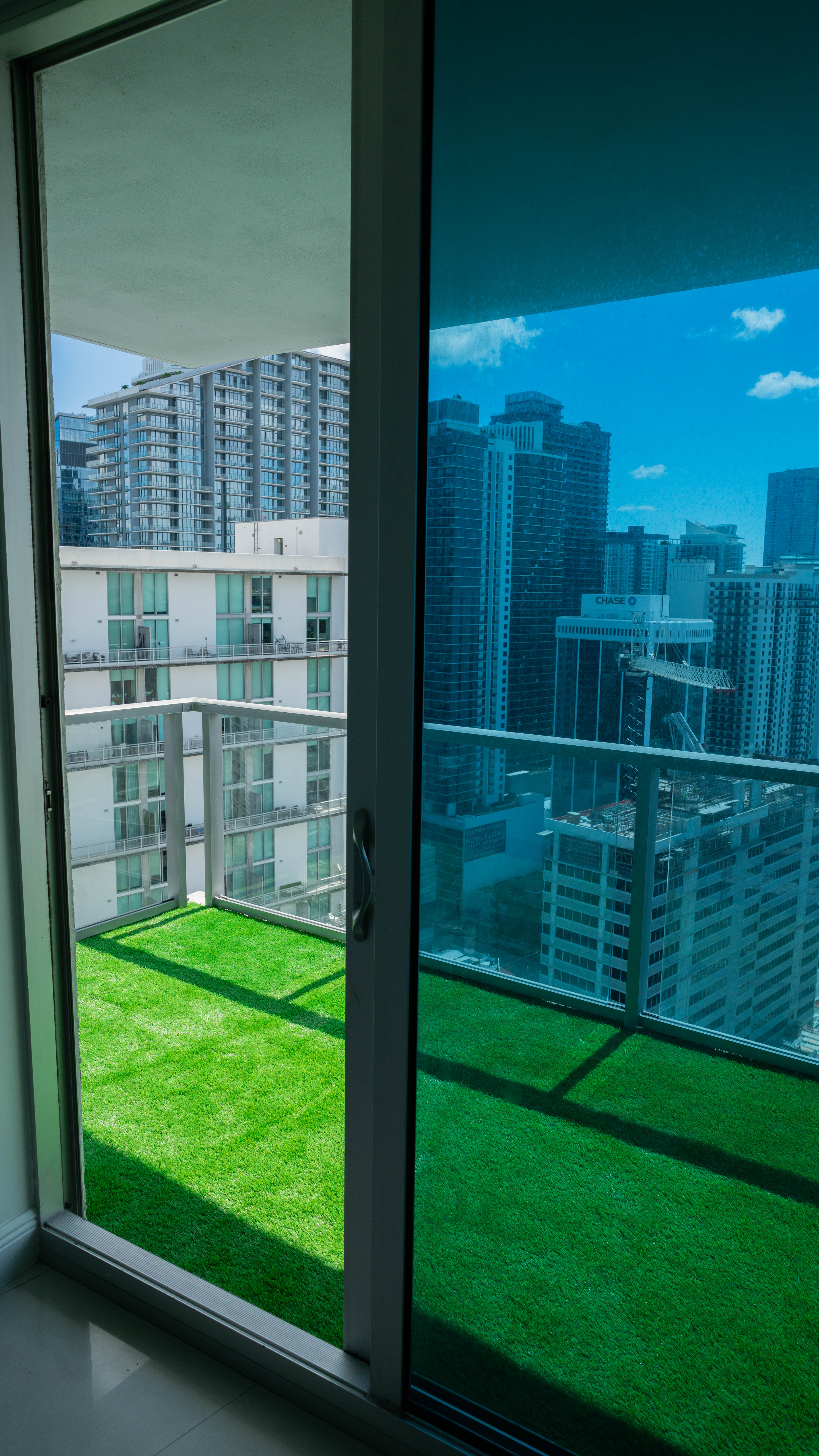
An example of what approved installations look like — clean, uniform, professional.
6. Removal Documentation
A written description of the removal process — how the turf lifts, how any adhesive strips release cleanly, and confirmation that the surface is left undamaged. This addresses the "what happens when the resident moves out?" question.
7. Warranty Information
Details on the turf's lifespan (8–15 years), UV warranty, and what's covered. This reassures the board that the product is durable and won't degrade into an eyesore.
How to Submit Your HOA Request
Here's the step-by-step process for getting approval in your Miami condo building:
- Obtain your building's ARC (Architectural Review Committee) form — available from your property management office or resident portal. Some buildings call it a "modification request" or "alteration request" form.
- Request the HOA Approval Kit from us — we'll send you all the documents above, tailored to your building if needed. Call us at (728) 240-4020 or email [email protected].
- Submit the form with all attachments — include the COI, spec sheet, installation method description, and drainage explanation with your ARC submission.
- Follow up if needed — most buildings respond within 5–14 business days. If there's a delay, a polite follow-up to your property manager helps.
- Schedule installation once approved — we'll coordinate with your building's loading dock, service elevator, and any scheduling requirements.
Common HOA Concerns (and How We Address Them)
"Will it damage the surface?"
No. Our installation uses no permanent adhesives and no penetrating fasteners. The turf sits on top of the existing surface and can be removed without trace. We can demonstrate this with photos of previous removals.
"Will it affect drainage?"
No. The turf has a perforated backing that drains at 30+ inches per hour — far faster than any Miami rainfall. Water passes through the turf and off the balcony exactly as it would without it. There's no pooling, no damming, and no interference with the building's drainage slopes or scuppers.
"Is it a fire hazard?"
Our turf is manufactured to meet standard fire safety ratings for outdoor synthetic surfaces. We can provide fire rating documentation if your building requires it.
"What if a neighbor complains?"
Our turf creates no noise, no odor, and no nuisance. It's a clean, uniform surface that typically looks better than what it replaces. Most neighbors actually want turf after seeing it installed.
"Can the resident remove it when they leave?"
Yes — the entire installation can be removed in under an hour with no damage to the surface. We provide written removal documentation for this purpose.
Miami Buildings and HOA Types We Work With
Miami's condo landscape is diverse, and HOA requirements vary accordingly:
- Brickell high-rises: Typically have full-time property management, formal ARC processes, and strict COI requirements. Our kit covers all of this. See our Brickell guide for building-specific tips.
- Miami Beach condos: Often have additional salt-air and wind considerations. Our spec sheet addresses coastal durability. See our Miami Beach guide for more.
- Downtown Miami and Edgewater: A mix of new construction and older buildings. The process is similar across all.
- Sunny Isles and Aventura: Luxury buildings with detailed approval processes — our HOA Kit is designed for exactly these situations.
- Fort Lauderdale: Similar HOA landscape with slightly more relaxed timelines in many buildings.
Start Your HOA Approval Process Today
Getting HOA approval for balcony turf in Miami is straightforward when you have the right documents and understand the process. We've built our HOA Approval Kit to make it as easy as possible — you submit the paperwork, we handle the rest.
Ready to get started? Get your free quote today, and we'll send you the full HOA Approval Kit for your building. Or call us at (728) 240-4020 with any questions — we're happy to walk you through the process, speak with your property manager, or help you understand your building's specific requirements.
If you're a renter, don't skip the approval process — check our renter-friendly guide for how to handle both your landlord and your HOA. And for pricing details, see our balcony measurement guide and our complete pricing breakdown.
Ready to Green Your Balcony?
Get a free quote in under 5 minutes. Pricing starts at $499 ($10/sq ft).
We serve Brickell, Downtown Miami, Miami Beach, Sunny Isles, Aventura & Fort Lauderdale.